Yiming Li

Robot vision researcher · PhD in Computer Science, Swansea University

I received my PhD in Computer Science from Swansea University in 2026, supervised by Prof. Xianghua Xie. My research lies at the intersection of computer vision, 3D perception and robotics, with a focus on how robots understand and act in the physical world from limited visual information. I am also interested in human-centred technology that makes digital systems safer and more accessible.

Research interests: robot vision, 6-DoF grasp detection, single-view 3D reconstruction, uncertainty in perception.

Portrait of Yiming Li

News

All news

Selected publications

All publications
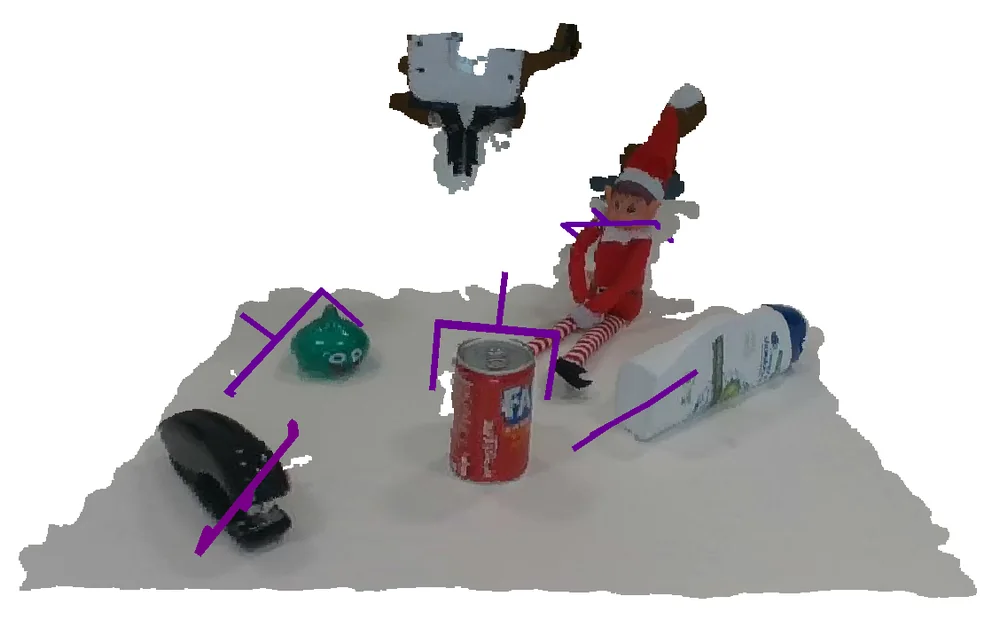
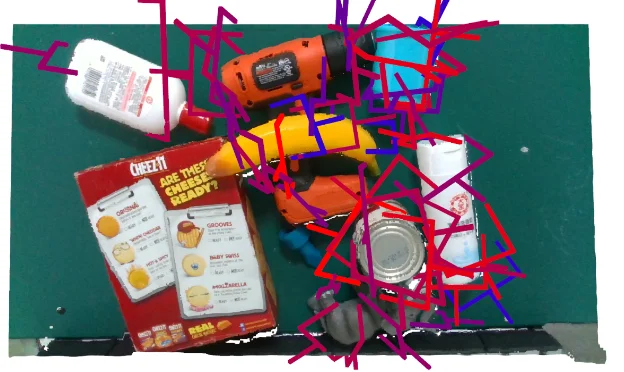
  1. Figure from ACE-Grasp: Aleatoric Ambiguity Modeling via Consistency and Exploration for Grasping

    ACE-Grasp: Aleatoric Ambiguity Modeling via Consistency and Exploration for Grasping

    Yiming Li, Xianghua Xie

    International Conference on Pattern Recognition (ICPR), 2026Oral

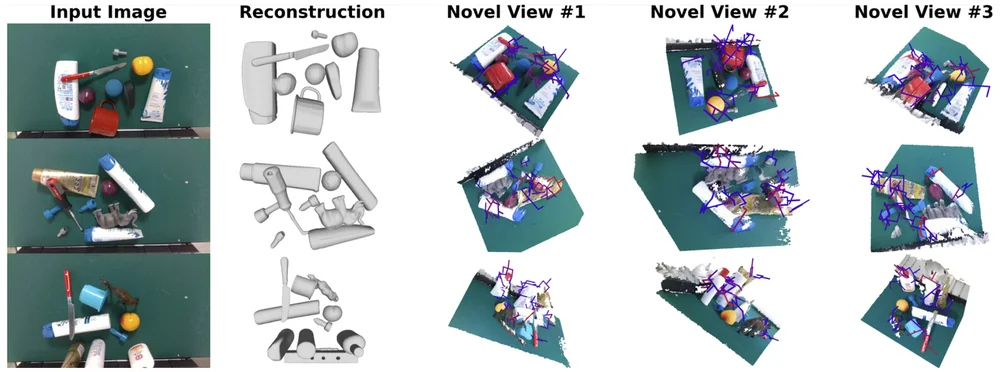
  2. Figure from Gripper Placement Matters: Bidirectional Constrained Spatial Grasp Density Field for Grasp Generation in Cluttered Scenes

    Gripper Placement Matters: Bidirectional Constrained Spatial Grasp Density Field for Grasp Generation in Cluttered Scenes

    Yiming Li, Chen Hu, Yue Yang, Xianghua Xie, Hanchi Ren

    IEEE International Conference on Advanced Robotics and Mechatronics (ICARM), 2026Oral

  3. Figure from AAO-Grasp: Diffusion-Enhanced Object-Level Grasp All at Once

    AAO-Grasp: Diffusion-Enhanced Object-Level Grasp All at Once

    Yiming Li, Hanchi Ren, Yue Yang, Xianghua Xie

    International Conference on Robotic Computing and Communication (RoboticCC), 2025

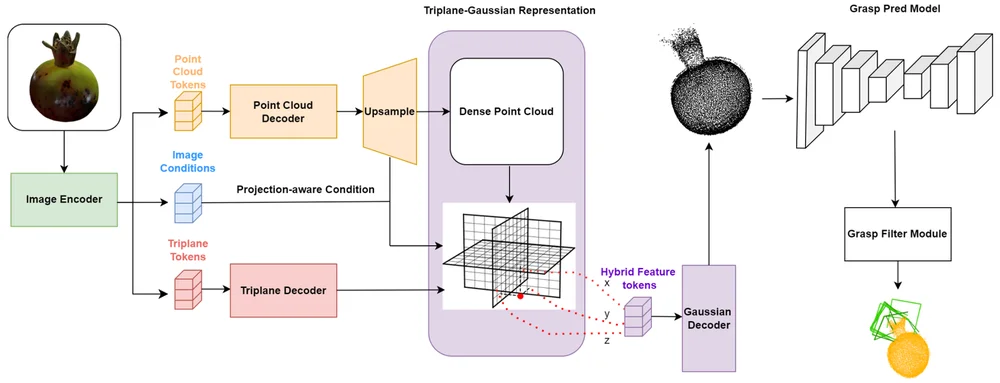
  4. Figure from Triplane Grasping: Efficient 6-DoF Grasping with Single RGB Images

    Triplane Grasping: Efficient 6-DoF Grasping with Single RGB Images

    Yiming Li, Hanchi Ren, Yue Yang, Jingjing Deng, Xianghua Xie

    IEEE International Conference on Advanced Robotics and Mechatronics (ICARM), 2025Oral

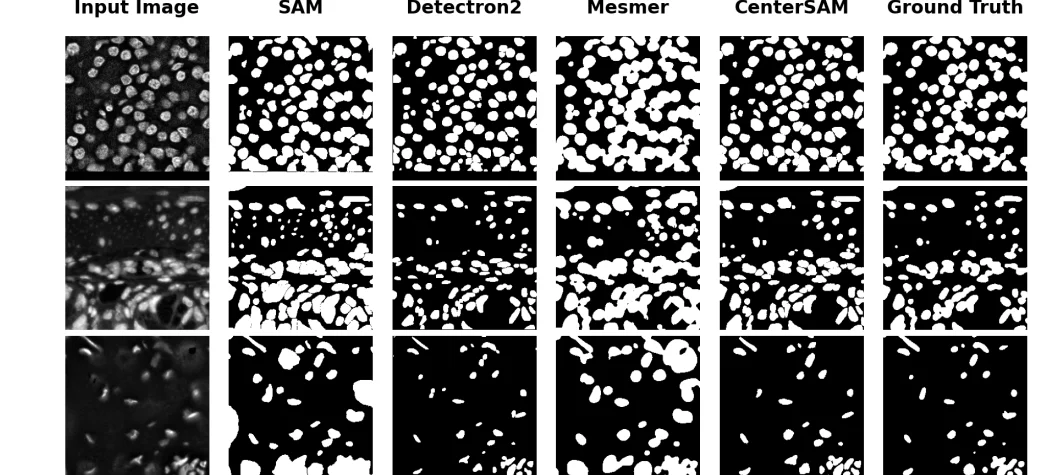
  5. Figure from CenterSAM: Fully Automatic Prompt for Dense Nucleus Segmentation

    CenterSAM: Fully Automatic Prompt for Dense Nucleus Segmentation

    Yiming Li, Hanchi Ren, Jingjing Deng, Xiaoke Ma, Xianghua Xie

    IEEE International Symposium on Biomedical Imaging (ISBI), 2024

Research in motion

Short films from my papers and projects: a robot grasping in clutter, grasping from a single photo, and a tutorial made for older adults. Below them, the kind of grasping pipeline I work on, animated step by step.

ICARM 2026, oral · Real robot · 3:00

Where should the gripper land?

A dual-arm robot clears a cluttered table. One arm looks, the other grasps. The method first works out where a gripper can physically land, then how to grasp, and succeeds more often than a strong baseline on objects it has never seen.

Read the paper

RoboticCC 2025 · Simulation · 0:45

Grasping from one colour photo

With a single ordinary image and no depth sensor, the robot rebuilds the hidden shape of each object and grasps it, shown side by side with a baseline that also uses depth.

Read the paper

DEFEND Impact · Public engagement, Welsh and English · 1:30

Stop, then check

The first film in a tutorial series for older adults, on what to do when a text says your bank account has been locked.

About the project

Interactive demo

From a scan to a grasp

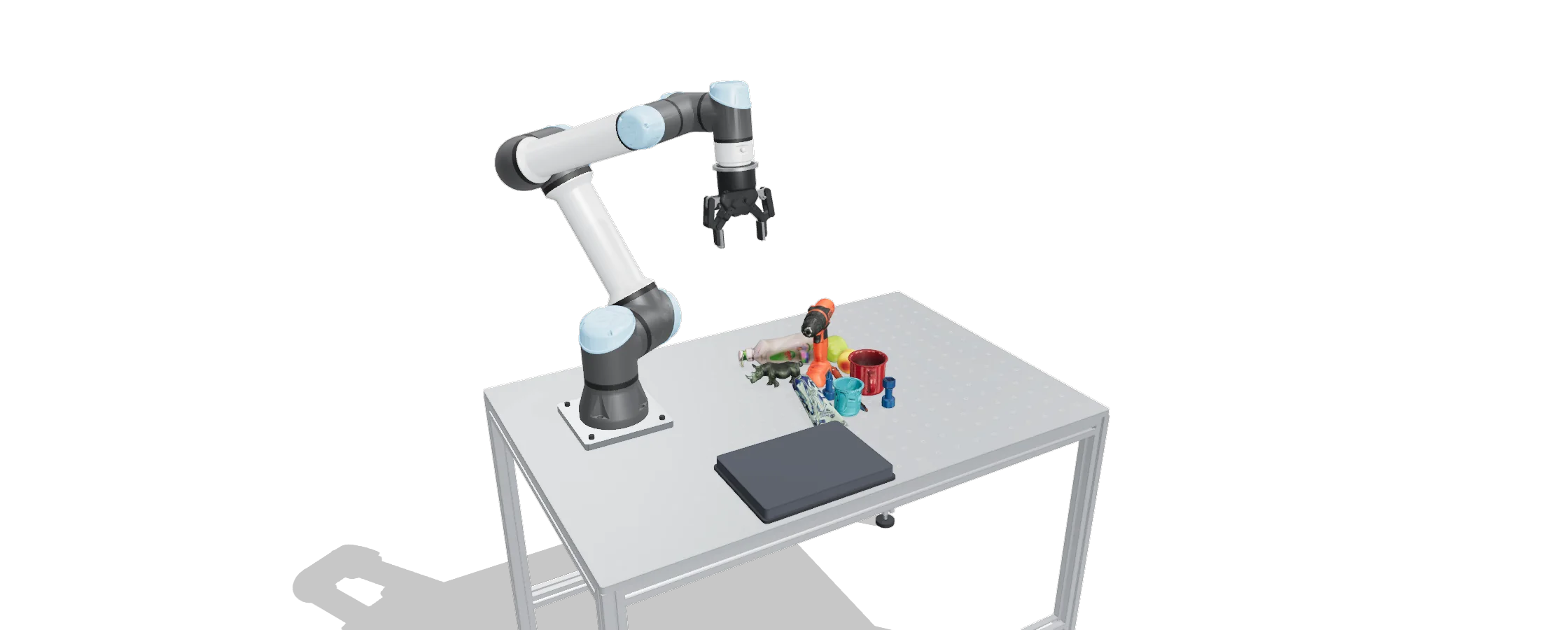
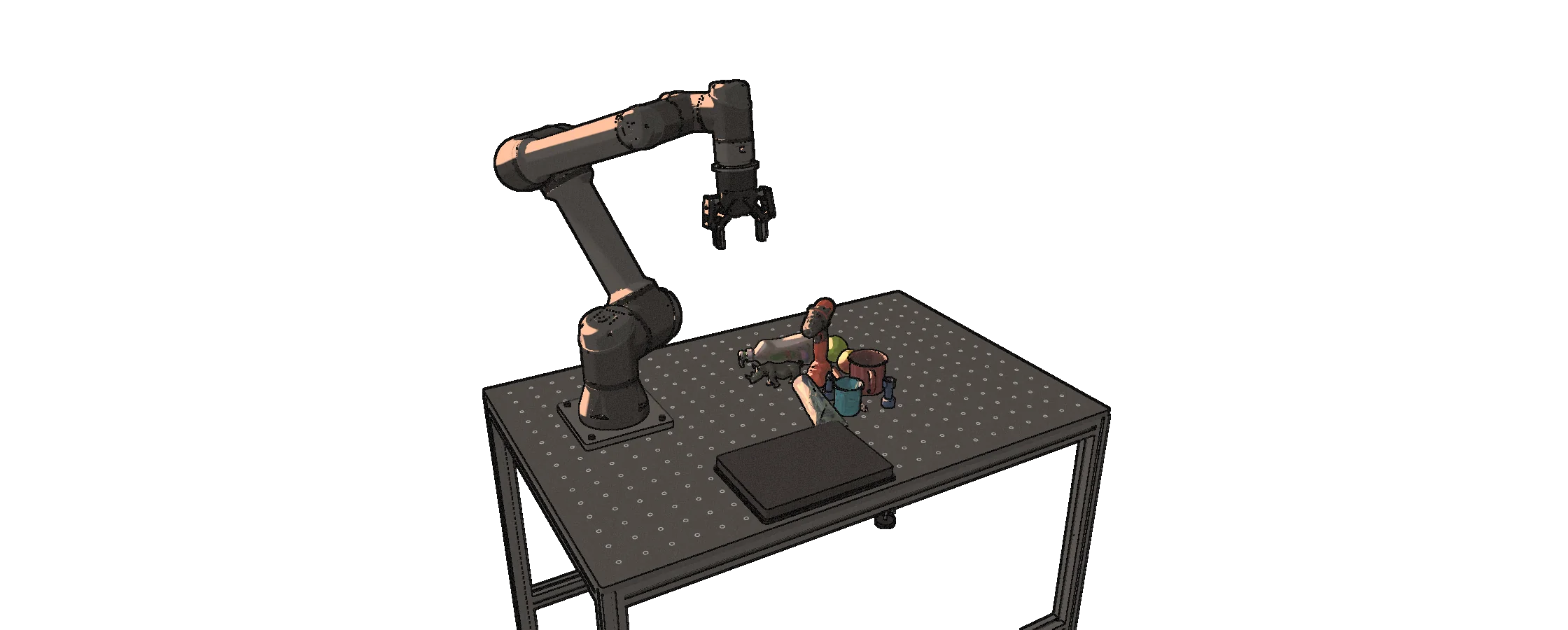
An animated walk-through of the work I do, vision-guided robotic grasping. A robot arm scans a cluttered table with its wrist camera, reconstructs the scene in 3D, evaluates candidate grasps, rejects those that would collide, and picks up its target.

A robot arm with a two-finger gripper above a table of household objects, among them a power drill. A robot arm with a two-finger gripper above a table of household objects, among them a power drill.

The robot. A six-axis arm, an adaptive gripper and a wrist-mounted depth camera, assembled part by part.

Open full screen

Scene data: GraspNet-1Billion. Robot, gripper and camera models: MuJoCo Menagerie and Intel RealSense. Sources and licences

Expertise

3D vision for grasping
6-DoF grasp detection in clutter, single-view 3D reconstruction (triplane-Gaussian, diffusion), uncertainty-aware prediction, RGB-D and point clouds.
Real-robot experiments
UFactory xArm 7 and Lite 6, RealSense D435i and Kinect, eye-in-hand sensing, multi-camera calibration and point-cloud fusion, PyBullet simulation.
Deep learning
PyTorch and MinkowskiEngine; SAM, CLIP, DINOv2 and PTv3 encoders; reproducing published methods stage by stage; AP, success rate, Chamfer and IoU evaluation.
Research software and data
GraspPanda (pytest, GitHub Actions, packaging, documentation); dataset building and annotation quality control with a self-hosted CVAT server; Linux GPU servers, Docker.
Human-centred studies
A participatory study app for older adults with consent flow and researcher dashboard; bilingual tutorial videos; ethics process and public engagement.
Teaching and communication
Teaching assistant on deep learning and machine learning modules; Summer School tutorial on vision-based grasping; orals at ICPR and ICARM.

Service and teaching

Service

  • Programme committees of ECoR 2026, EPIA 2026 and AIiH 2025–2026
  • Reviewer for ICRA, IROS, ICPR, ICARM, RoboticCC, ISBI, Robotica and IET Computer Vision
  • Session chair, Robotic Vision, RoboticCC 2025

Teaching

  • Teaching assistant on deep learning and machine learning modules, Swansea University, 2021–2025
  • Tutorial: Vision-Based Robotic Arm Grasping, Summer School 2026
  • Evaluated more than 30 MSc research proposals (2023)